Fasting Rules
 Meat
Allowed
 Fish
Allowed
 Dairy
Allowed
 Oil
Allowed
 Wine
Allowed
Saints & Commemorations
Beginning of the Lenten Triodion
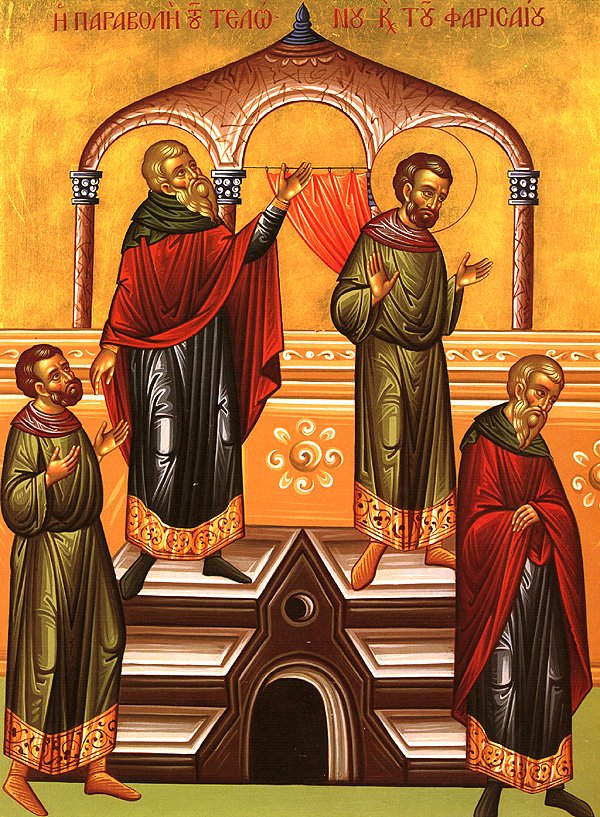
The Sunday after the Sunday of Zacchaeus is devoted to the Publican and the Pharisee. At Vespers the night before, the Triodion (the liturgical book used in the services of Great Lent) begins.
Two men went to the Temple to pray. One was a Pharisee who scrupulously observed the requirements of religion: he prayed, fasted, and contributed money to the Temple.
The Sunday after the Sunday of Zacchaeus is devoted to the Publican and the Pharisee. At Vespers the night before, the Triodion (the liturgical book used in the services of Great Lent) begins.
Two men went to the Temple to pray. One was a Pharisee who scrupulously observed the requirements of religion: he prayed, fasted, and contributed money to the Temple. These are very good things, and should be imitated by anyone who loves God. We who may not fulfill these requirements as well as the Pharisee did should not feel entitled to criticize him for being faithful. His sin was in looking down on the Publican and feeling justified because of his external religious observances.
The second man was a Publican, a tax-collector who was despised by the people. He, however, displayed humility, and this humility justified him before God (Luke 18:14).
The lesson to be learned is that we possess neither the Pharisee’s religious piety, nor the Publican’s repentance, through which we can be saved. We are called to see ourselves as we really are in the light of Christ’s teaching, asking Him to be merciful to us, deliver us from sin, and to lead us on the path of salvation.
Two weeks before the beginning of the Fast, as part of our preparation for Great Lent, Holy Week, and Pascha, the Church prescribes the reading of Saint Mark's Gospel. From Monday to Friday the focus is on the end times, and the Savior's death and burial.
Troparion
Let us flee from the pride of the Pharisee! / And learn humility from the Publican’s tears! / Let us cry to our Savior, / have mercy on us, / only merciful One!
Ven. Timothy of Symbola
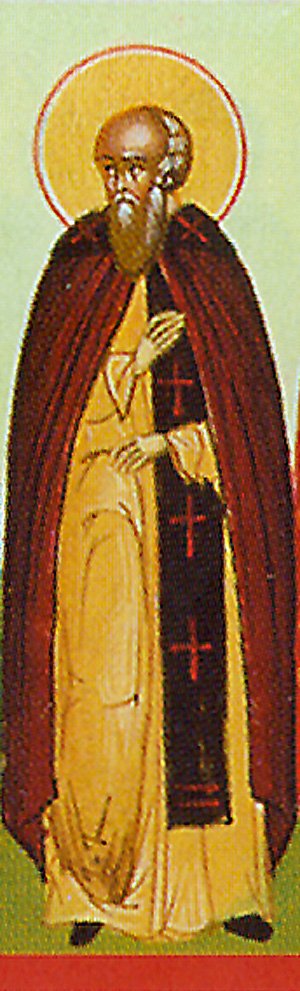
Saint Timothy of Symbola was of Italian descent. He became a monk at a young age and pursued asceticism at a monastery called “Symbola”, in Asia Minor near Mount Olympus. At that time Theoctistus was the archimandrite of the monastery. Saint Timothy was the disciple of Theoctistus and also of Saint Platon of the Studion Monastery (April 5).
At
Saint Timothy of Symbola was of Italian descent. He became a monk at a young age and pursued asceticism at a monastery called “Symbola”, in Asia Minor near Mount Olympus. At that time Theoctistus was the archimandrite of the monastery. Saint Timothy was the disciple of Theoctistus and also of Saint Platon of the Studion Monastery (April 5).
Attaining a high degree of spiritual perfection, he received from God the gift of healing the sick and casting out unclean spirits. He spent many years as a hermit, roaming the wilderness, the mountains and forests, both day and night offering up prayer to the Lord God. He died at a great old age, in the year 795.
Troparion - Tone 4
O God of our Fathers, / always act with kindness towards us; / take not Your mercy from us, / but guide our lives in peace / through the prayers of Saints Timothy and Eustathius.
Kontakion - Tone 4
Blessed wonder-worker, Timothy, / you rose from the east like a brilliant star / causing virtue to spring in the hearts of the faithful / through your miracles.
St Eustathius, archbishop of Antioch (337)
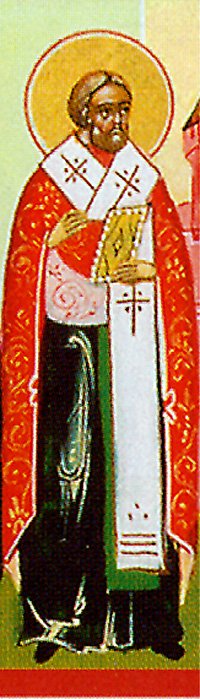
Saint Eustathius, Archbishop of Antioch (323-331) was born in Side, Pamphylia in 324. He was Bishop of Beroea (modern Aleppo), and enjoyed the love and esteem of the people, and at the request of his flock he was elevated by the Fathers of the First Ecumenical Council (325) to the See of Antioch.
Saint Eustathius was a learned theologian, and was also distinguished by his broad knowledge in secular sciences.
Saint Eustathius, Archbishop of Antioch (323-331) was born in Side, Pamphylia in 324. He was Bishop of Beroea (modern Aleppo), and enjoyed the love and esteem of the people, and at the request of his flock he was elevated by the Fathers of the First Ecumenical Council (325) to the See of Antioch.
Saint Eustathius was a learned theologian, and was also distinguished by his broad knowledge in secular sciences. When the heresy of Arius began to spread in the East (Arianism denied the consubstantiality of the Son of God with the Father), Saint Eustathius struggled zealously for the purity of the Orthodox Faith through his words and his writings.
The First Ecumenical Council was convened in the year 325 by the holy God-crowned Emperor Constantine the Great (306-337). The first to preside over this Council was Saint Eustathius. The Council condemned the heretical teachings of Arius and incorporated the Orthodox confession into the Symbol of Faith (the Nicene Creed).
But the mad Arius, as Saint Eustathius called him, refused to renounce his errors. He and those who shared his opinion were excommunicated from the Church by the Council. Among the bishops who signed the Nicene Symbol of Faith were some who sympathized with the heresy of Arius, but signed the Acts of the Council through fear of excommunication.
After the Council, his enemies plotted against Saint Eustathius. With great cunning they gained his consent to convene a local Council at Antioch. Having bribed a certain profligate woman, they persuaded her to appear at the Council with an infant at her breast, and falsely declare that Saint Eustathius was the father of the infant.
The Arians declared Saint Eustathius deposed, violating the Apostolic Rule that accusations against the clergy must be substantiated by two witnesses. Without a trial he was sent off into exile in Thrace. But the lie was soon unmasked: the woman repented after falling grievously ill. She summoned the clergy, and in the presence of many people, she confessed her sin.
Saint Constantine the Great died around this time, and his son Constantius (337-361), who shared the heretical views of Arius and favored the Arian bishops, succeeded his father on the throne. Even in exile, Saint Eustathius struggled for Orthodoxy with the same zeal. He died in exile, in the city of Philippi or Trajanopolis, in the year 337.
Convened in the year 381 at Constaninople, the Second Ecumenical Council confirmed the Orthodox Symbol of Faith, which Saint Eustathius had so vigorously defended. The Arian heresy was once again anthematized.
In the year 482 the relics of Saint Eustathius were reverently transferred from Philippi to Antioch, to the great joy of the people of Antioch, who had not ceased to honor and love their patriarch.
Saint Eustathius was esteemed by the great hierarchs of the fourth century: Basil the Great, John Chrysostom, Athanasius of Alexandria, Epiphanius of Cyprus, Anastasius of Sinai, and Jerome of Stridonia. The renowned church historian Bishop Theodoret of Cyrrhus calls Saint Eustathius a pillar of the Church and a man of piety, of equal stature with Saint Athanasius of Alexandria and the other bishops at the forefront of the struggle for Orthodoxy.
Troparion - Tone 4
O God of our Fathers, / always act with kindness towards us; / take not Your mercy from us, / but guide our lives in peace / through the prayers of Saints Timothy and Eustathius.
St John the Scholastic, patriarch of Constantinople (577)
Saint John Scholasticus, Patriarch of Constantinople, was born in Sirimion near Antioch, and studied law. He was ordained a priest because of his great holiness and piety. Later he was elevated to the patriarchal throne, where he spent the years 565 to 577.
While still a presbyter, he compiled a collection of Church Rules in Fifty Chapters, and later during his time as patriarch he made a Codex of civil laws relating to the Church.
Saint John Scholasticus, Patriarch of Constantinople, was born in Sirimion near Antioch, and studied law. He was ordained a priest because of his great holiness and piety. Later he was elevated to the patriarchal throne, where he spent the years 565 to 577.
While still a presbyter, he compiled a collection of Church Rules in Fifty Chapters, and later during his time as patriarch he made a Codex of civil laws relating to the Church. From these collections was compiled the Nomocanon (i.e. “Law-canon”), used in church administration. Saint John also composed the “Cherubic Hymn”, and “Of Thy Mystical Supper.”
Troparion - Tone 4
In truth you were revealed to your flock as a rule of faith, / an image of humility and a teacher of abstinence; / your humility exalted you; / your poverty enriched you. / Hierarch Father John, / entreat Christ our God / that our souls may be saved.
Saint Zachariah, Patriarch of Jerusalem (632)
Saint Zacharias, Patriarch of Jerusalem, lived from the end of the sixth to the early seventh centuries. He became Patriarch of Jerusalem in 609. In the year 614 the Persian emperor Chosroes fell upon Jerusalem, looted it, and led many Christians into captivity, including Saint Zacharias.
Chosroes also captured the Life-Creating Cross of Christ.
Saint Zacharias, Patriarch of Jerusalem, lived from the end of the sixth to the early seventh centuries. He became Patriarch of Jerusalem in 609. In the year 614 the Persian emperor Chosroes fell upon Jerusalem, looted it, and led many Christians into captivity, including Saint Zacharias.
Chosroes also captured the Life-Creating Cross of Christ. During the invasion, as many as 90,000 Christians perished. Afterwards Chosroes was compelled to sue for peace with the Byzantine Emperor Heraclius (610-641). The Cross of the Lord was returned to Jerusalem. The Christian captives who remained alive also were returned, among them Patriarch Zacharias, who died peacefully in the year 633.
Troparion - Tone 4
In truth you were revealed to your flock as a rule of faith, / an image of humility and a teacher of abstinence; / your humility exalted you; / your poverty enriched you. / Hierarch Father Zacharias, / entreat Christ our God / that our souls may be saved.
Scripture Readings
☩Epistle
2 Timothy 3:10-15
10
But thou hast fully known my doctrine, manner of life, purpose, faith, longsuffering, charity, patience,
11
Persecutions, afflictions, which came unto me at Antioch, at Iconium, at Lystra; what persecutions I endured: but out of them all the Lord delivered me.
12
Yea, and all that will live godly in Christ Jesus shall suffer persecution.
13
But evil men and seducers shall wax worse and worse, deceiving, and being deceived.
14
But continue thou in the things which thou hast learned and hast been assured of, knowing of whom thou hast learned them;
15
And that from a child thou hast known the holy scriptures, which are able to make thee wise unto salvation through faith which is in Christ Jesus.
☩Gospel
Luke 18:10-14
10
Two men went up into the temple to pray; the one a Pharisee, and the other a publican.
11
The Pharisee stood and prayed thus with himself, God, I thank thee, that I am not as other men are, extortioners, unjust, adulterers, or even as this publican.
12
I fast twice in the week, I give tithes of all that I possess.
13
And the publican, standing afar off, would not lift up so much as his eyes unto heaven, but smote upon his breast, saying, God be merciful to me a sinner.
14
I tell you, this man went down to his house justified rather than the other: for every one that exalteth himself shall be abased; and he that humbleth himself shall be exalted.
Liturgical data sourced from OCA.org and orthocal.info